Iconic landings and milestones
Europe: Themis / Prometheus (Esrange, SALTO)
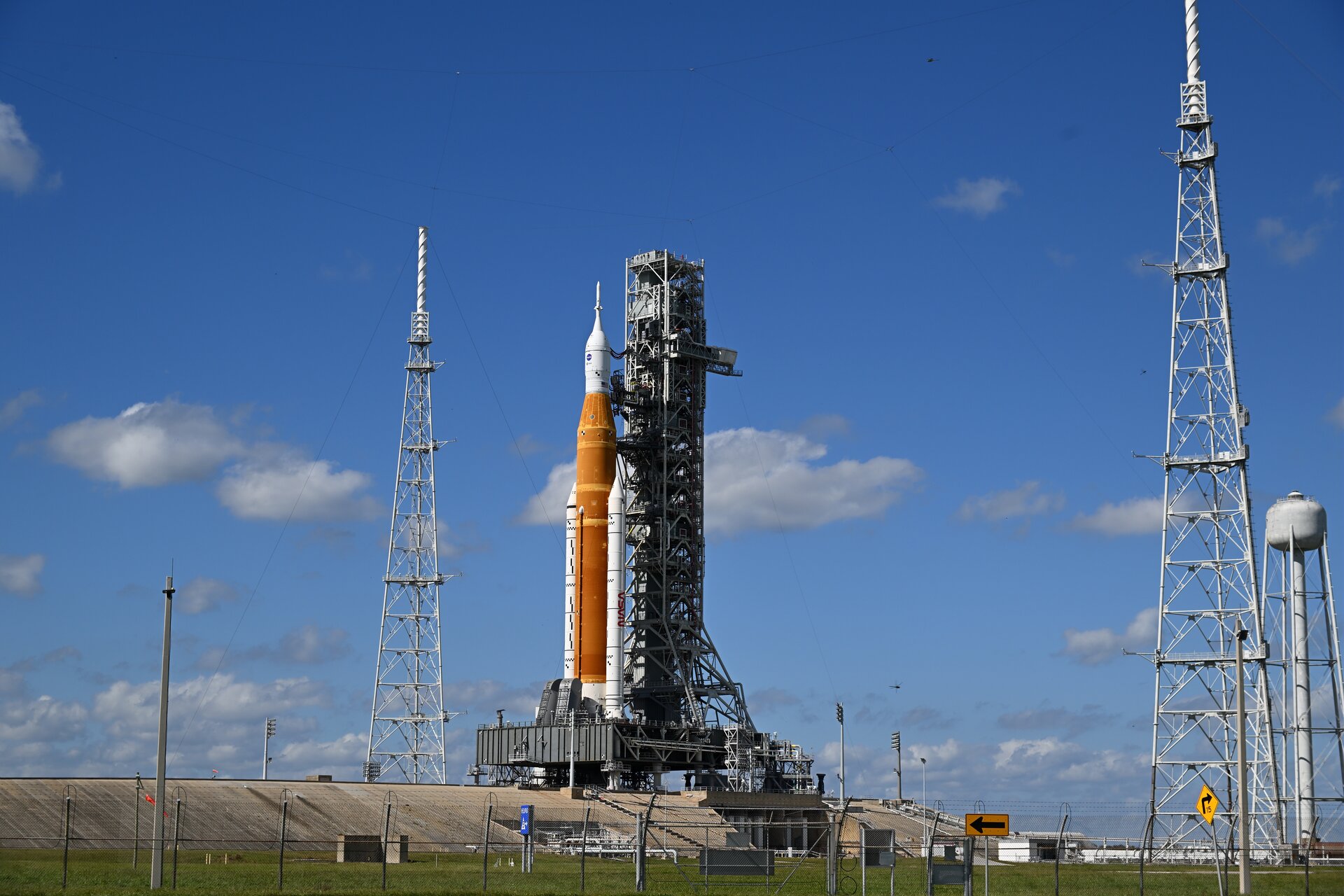
Themis is a joint ESA/ArianeGroup/SSC vertical landing capable upper stage demonstrator. In September 2025, the T1H vehicle was erected at the launch site in Esrange in preparation for hop tests.
D GLIDE BOOSTER concept – gallery
Rendered images and sketches of the D-section gliding return booster concept.
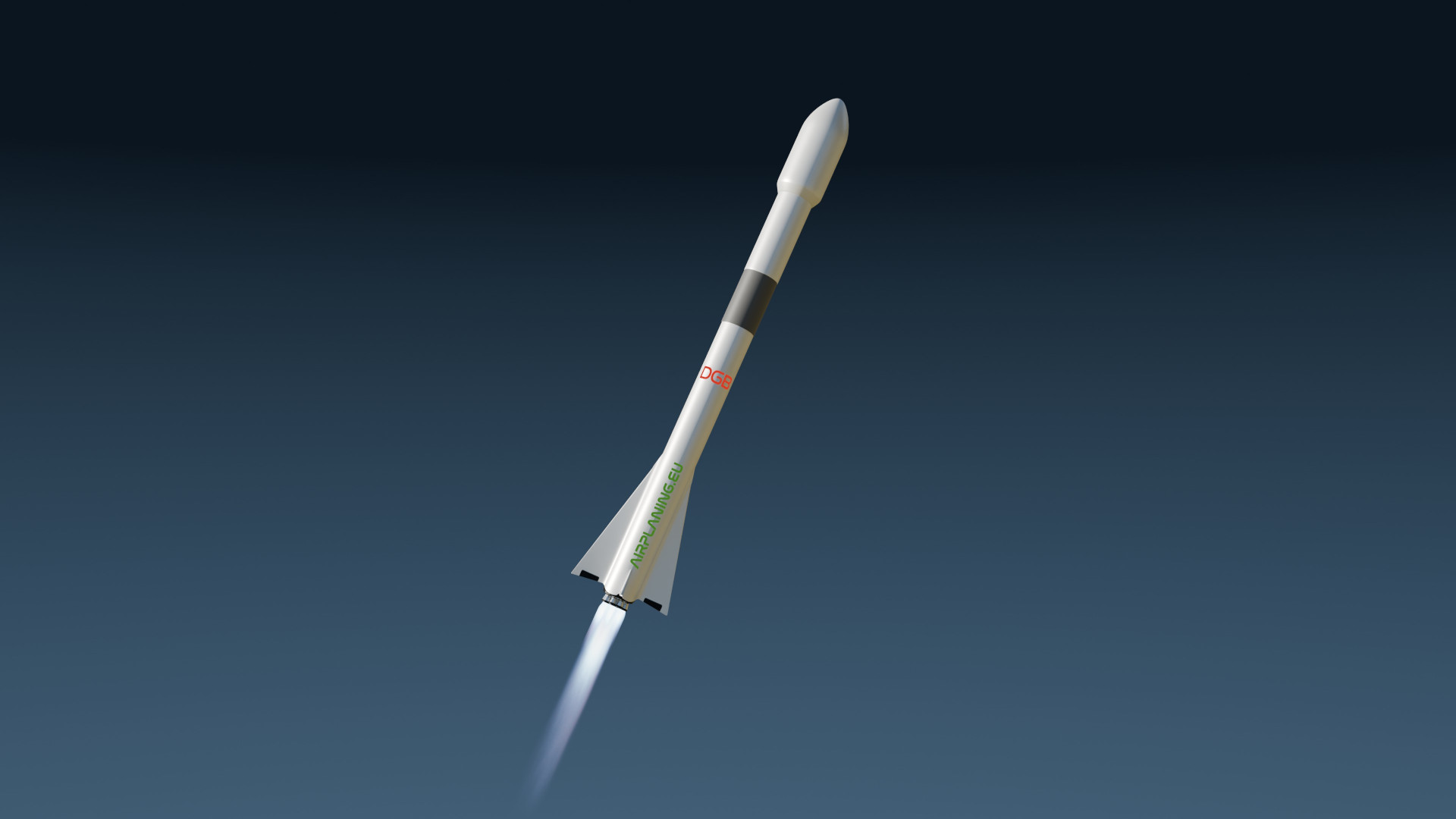
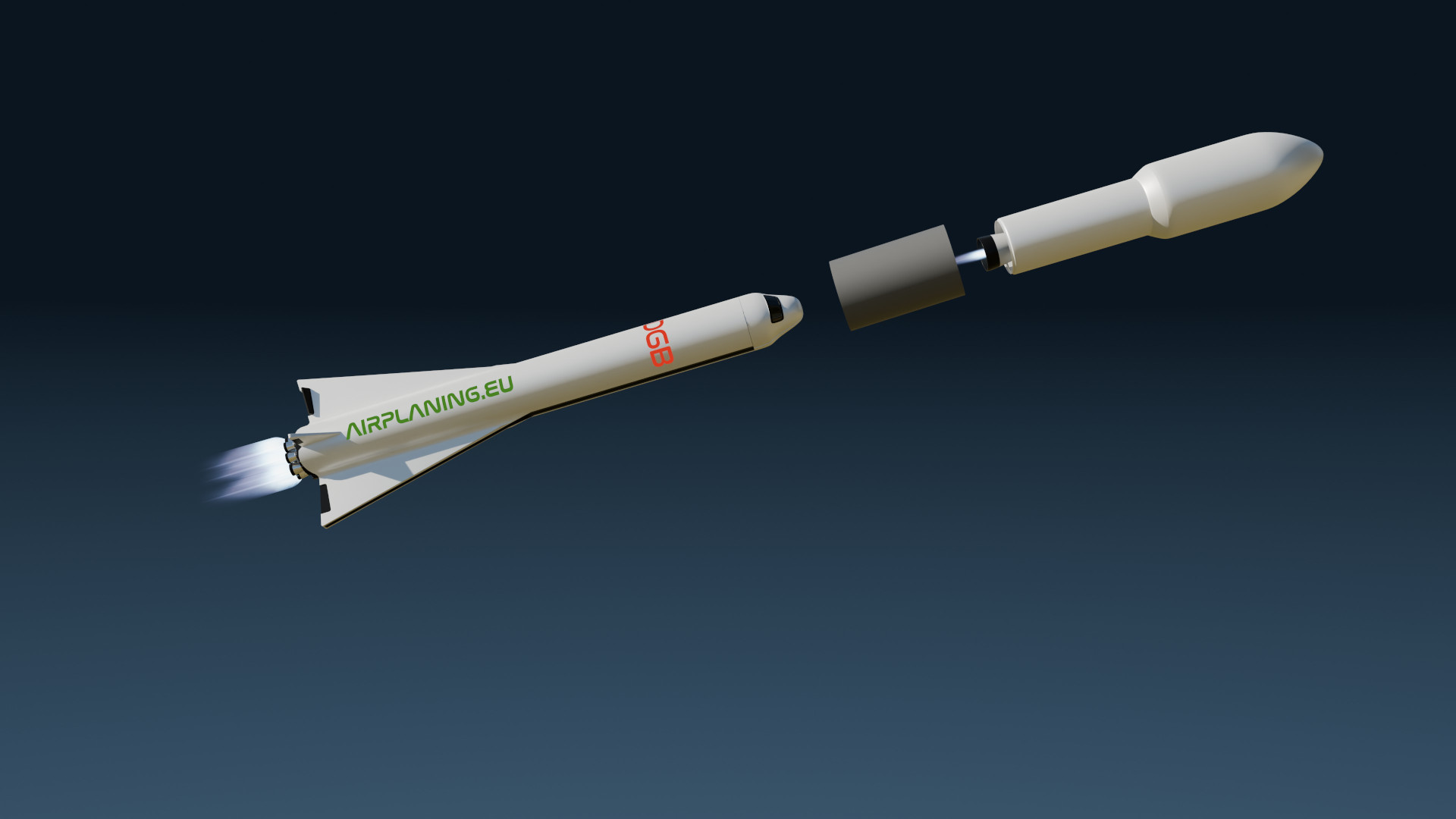
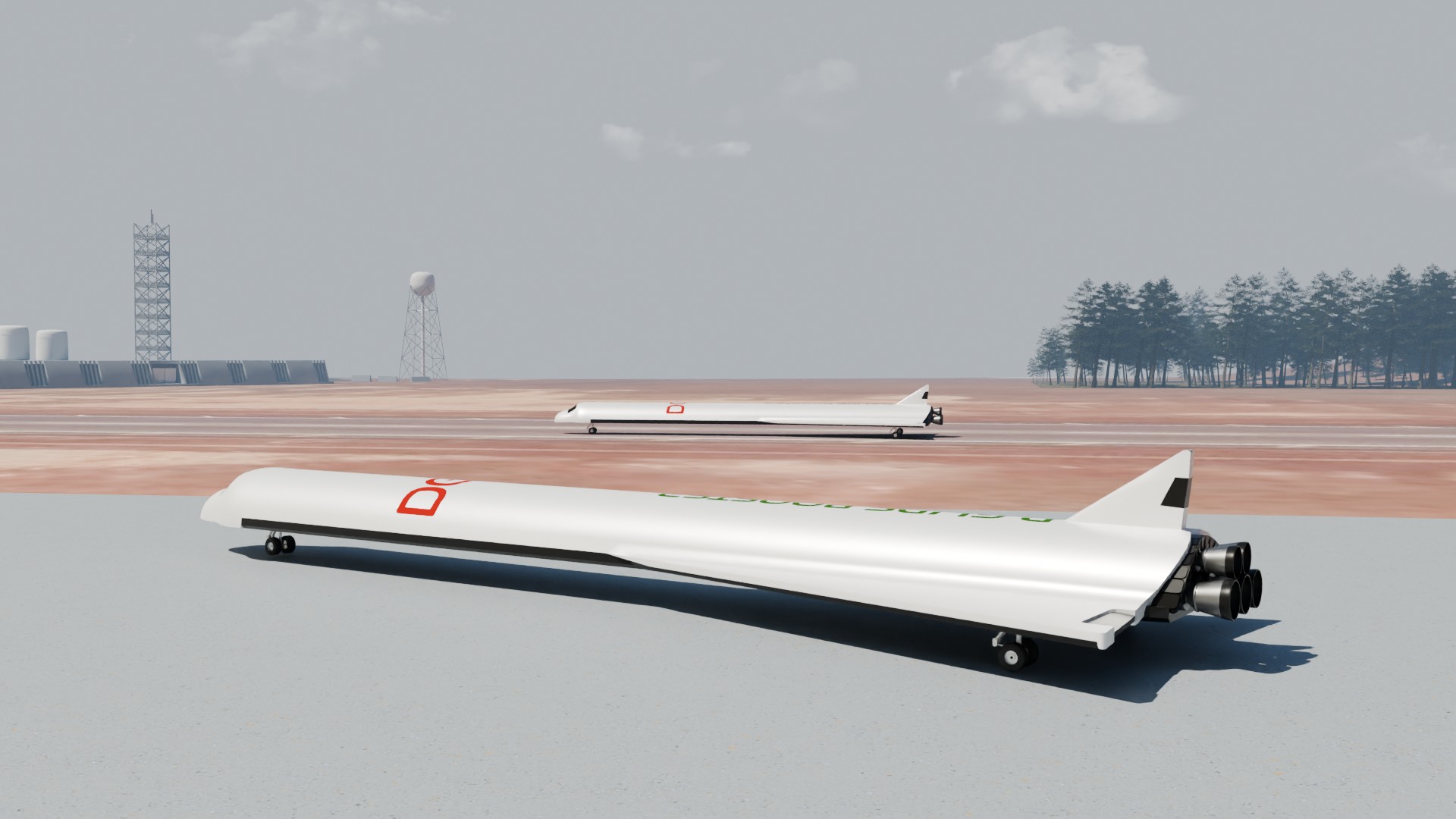
Why might a runway return be advantageous?
- Less landing propellant: aerodynamic lift reduces the fuel required for VTVL return.
- Operation & quick turnaround: hangar-like, airport ground handling; land turnaround.
- Cross-range: greater flexibility in terms of weather and traffic when choosing a landing site.
- European parallels: DLR LFBB, ESA Themis, ISRO RLV experiences – real "VTHL" trajectories.
Latest milestone
Nov 13, 2025 — Blue Origin / New Glenn milestone
Blue Origin’s New Glenn launched NASA’s ESCAPADE twin spacecraft and successfully landed its fully reusable first stage on Jacklyn in the Atlantic.
Blue Origin thus became the second entity after SpaceX to vertically land an orbital‑class booster.
Sources: Blue Origin, Reuters, Space.com.
DGB (D‑Glide Booster) offers a runway‑gliding alternative with airport‑style operations.
Reusable first‑stage approaches — comparison
Alongside SpaceX and Blue Origin’s VTVL systems, DGB proposes a runway‑gliding alternative.
| System | Operator | Return mode | Advantages | Limitations |
|---|---|---|---|---|
| Falcon 9 booster (RTLS) | SpaceX | VTVL — land pad | Rapid turnaround; hundreds of successful landings; mature ops. | High landing propellant; pad infrastructure; tighter weather window. |
| Falcon 9 booster (ASDS) | SpaceX | VTVL — sea drone ship | Higher payload to orbit; flexible launch geometry. | Sea logistics; sea‑state dependence; longer return to port. |
| New Shepard | Blue Origin | VTVL — land pad (suborbital) | Proven reuse; tourism + research platform. | Suborbital only; small payload; limited orbital relevance. |
| New Glenn (2025) | Blue Origin | VTVL — sea platform (orbital‑class) | Orbital‑class booster landing; high lift capacity; NASA ESCAPADE. | Few flights to date; sea infrastructure; fleet maturing. |
| Electron (recovery) | Rocket Lab | Parachute + marine recovery | Partial reuse on small launcher; agile test platform. | Partial only; small payload class; complex recovery ops. |
| DGB — D‑Glide Booster | airplaning.eu | Runway‑gliding return | Lower landing propellant; airport‑style ground ops; large cross‑range; optional horizontal takeoff. | Wing/empennage/gear mass; runway requirement; TRL experimental → needs large tunnel/flight demo. |
For more information, please Register here:
Sources & references (selection)
- SpaceX – Starship Flight 10: spacex.com/launches/starship‑flight‑10
- ESA/SSC – Themis at the launch pad: ESA Multimedia · SSC announcement
- ISRO – RLV LEX‑03 (video): YouTube
- Blue Origin – New Shepard NS‑35: blueorigin.com/news
- Rocket Lab – Electron recovery: Spaceflight Now, Space.com
- ULA – SMART/HIAD: AIAA pdf, ULA blog: LOFTID
- DLR LFBB image (CC BY‑SA 3.0): LFBB szócikk · Wikimedia image
- Baikal (Angara fly‑back) image: szócikk · Wikimedia image